
47⬅ Donald Trump: Ankles, Fluid, Weight, and Veins

Quicklinks







Matters before 2021 are covered on the
Trump.45 page.
Donald Trump's second term has been dominated by an obvious physical decline 1 that administration officials have steadfastly ignored, even as equally steadfast allies publicly fear for his health 2. At age 80, hard data in Trump's most recent medical report point to a disease called systemic amyloidosis:
Donald Trump's second term has been dominated by an obvious physical decline 1 that administration officials have steadfastly ignored, even as equally steadfast allies publicly fear for his health 2. At age 80, hard data in Trump's most recent medical report point to a disease called systemic amyloidosis:
- His blood pressure is 105/71, down 20 points (in the top number) from his lifelong excellent readings.
- His ankles are chronically and untreatably swollen ("edematous").
- His heart squeezes well, when seen on cardiac ultrasound.

Swelling ("edema") of Trump's ankles began in July 2024 or earlier, but his
physician and the White House did not mention the problem until spurred by
press photographs a year later.
They have never acknowledged the facial swelling ("peri-orbital edema") that
also appeared in mid-2024, and have consistently low-balled the amount of ankle
swelling.
SEE BELOW
The presidential physician's diagnosis of "chronic venous insufficiency," offered
in July 2025 and never revised, does not explain the facial swelling or the
rapid worsening of the ankle swelling from February to April 2025.
Heart failure and nephrotic syndrome are better explanations for Trump's fluid
accumulation.
MORE
The substantial accumulation of fluid in the ankles and legs complicates the
assessment of Trump's weight.
Despite his 13-pound increase in total weight from 2025 to 2026, his dry
weight appears to be relatively constant, meaning that he did not put on fat or
muscle, but he gained fluid.
SEE BELOW
In July 2025, the president's physician reported that he found no signs of heart
failure in the president
MORE.
He was driven to make this statement because
widely circulating photographs had recently showed marked swelling of Trump's ankles
SEE BELOW
and because swollen ankles ("edema") are a key sign of heart failure.
There are problems with his statement
MORE:
- Inadequate in multiple ways
- Delayed
- Date uncertain
- Not reiterated in May 2026
- Limited and misinterpreted evidence to support the claim
- Missing evidence that could refute the claim
- The proffered diagnosis is not tenable
- Ignored strong evidence for heart failure
- Limited, but direct evidence of heart failure symptoms
More...
Comment:
Many people are interested specifically in Trump's weight, but that topic can
no longer be isolated from his fluid retention and the factors mentioned on
the heart failure page
MORE.
Asides appear like this.
Total weight
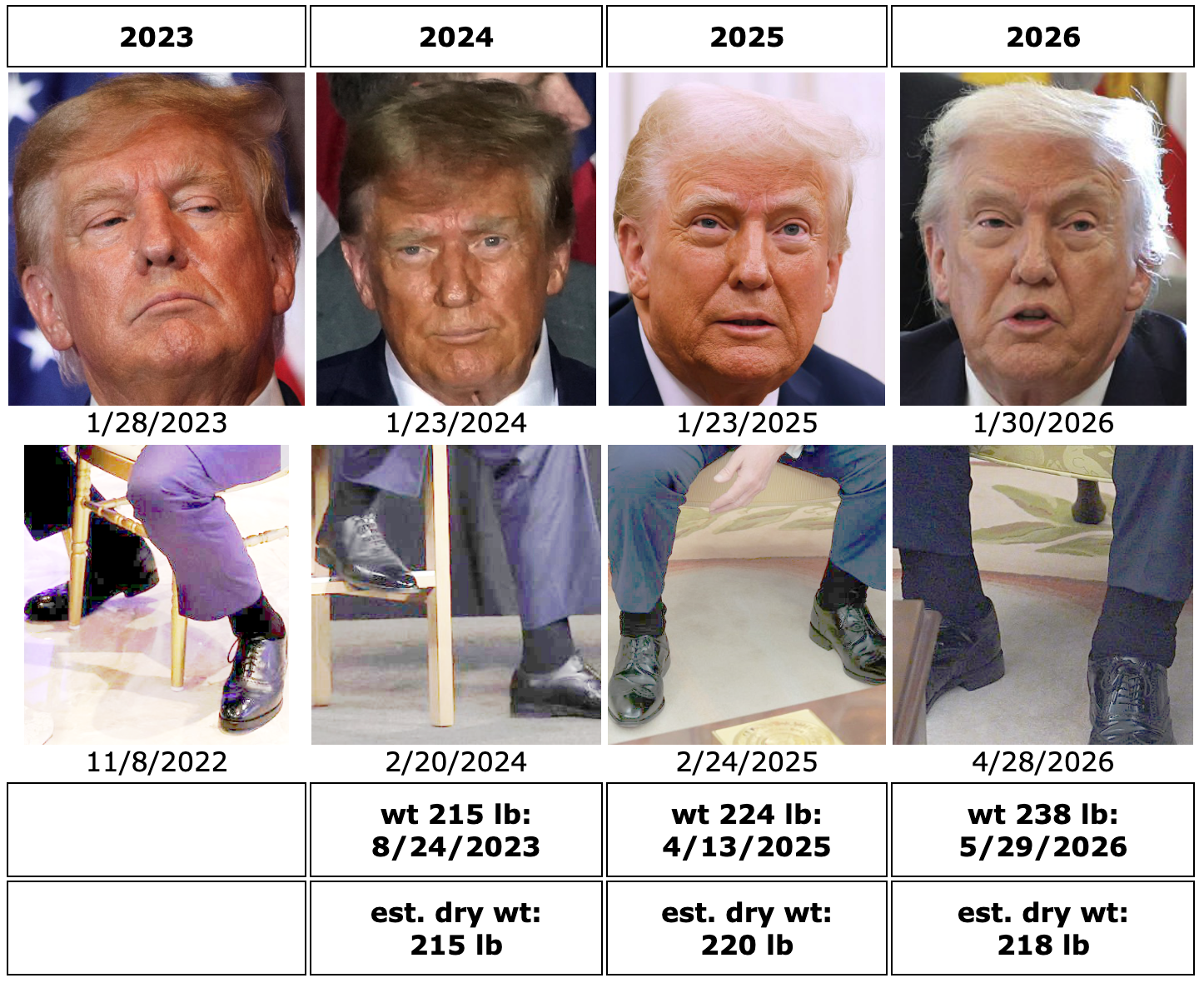
Donald Trump's weight is not a simple matter. It can be summarized in the graph below, but understanding requires a longer discussion. "Total weight" is the readout when Trump steps on the scale. "Dry weight" is the weight of his muscles, bones, and fat; it excludes the weight of the excess fluid in his ankles and legs (more on that later).Before turning to the matter of his fluid, a comment about the large drop in weight from mid-2020 to mid-2023: it is remarkable. But it may not be accurate. The weight of 215 came from Trump's booking record when he surrendered to law enforcement officials in Fulton County, Georgia. No one knows where the number originated. Other suspects booked that week in the county were not weighed, Trump's height is inaccurate, and there is no ruler visible in his mug shot as in common in many jurisdictions 3. Still, by examining the photos below, it is clear that Trump lost considerable weight in his face between January 2023 and January 2024. He did, it seems, lose dry weight during that time. Trump's private physician (in 2023) would have us believe that "President Trump has reduced his weight through an improved diet and continued daily physical activity, while maintaining a rigorous schedule" (November 2023) MORE. In January 2026, Trump denied ever taking a GLP-1 medication for weight loss, adding that "I probably should" 4 5. This is hard to believe. The lifestyle changes described are not sufficient to shave 30 pounds of fatty tissue. The smart money says Trump took a medication. If he is still taking it and has amyloidosis, I would be nervous about continuing it: once advanced enough, heart failure causes marked weight loss ("cardiac cachexia"). The dry weights in the graph were estimated by first estimating the fluid weight. The fluid estimates began with this observation: "A substantial gain of extracellular fluid volume, a minimum of 5 liters in adults, must usually take place before peripheral edema is manifested." 6a As shown in the graph's figures, Trump's edema was far beyond the "is manifested" stage. Thus, 7 liters were conservatively estimated for April 2025, although the true number is probably far higher. The May 2026 estimate was 10 liters because it looked larger than the earlier photo. Each liter was assumed to weight one kilogram, i.e. 2.2 pounds.Data sources: Trump's physical exams, plus 3 (for Aug. 2023) and 7 (for Jan. 2026).
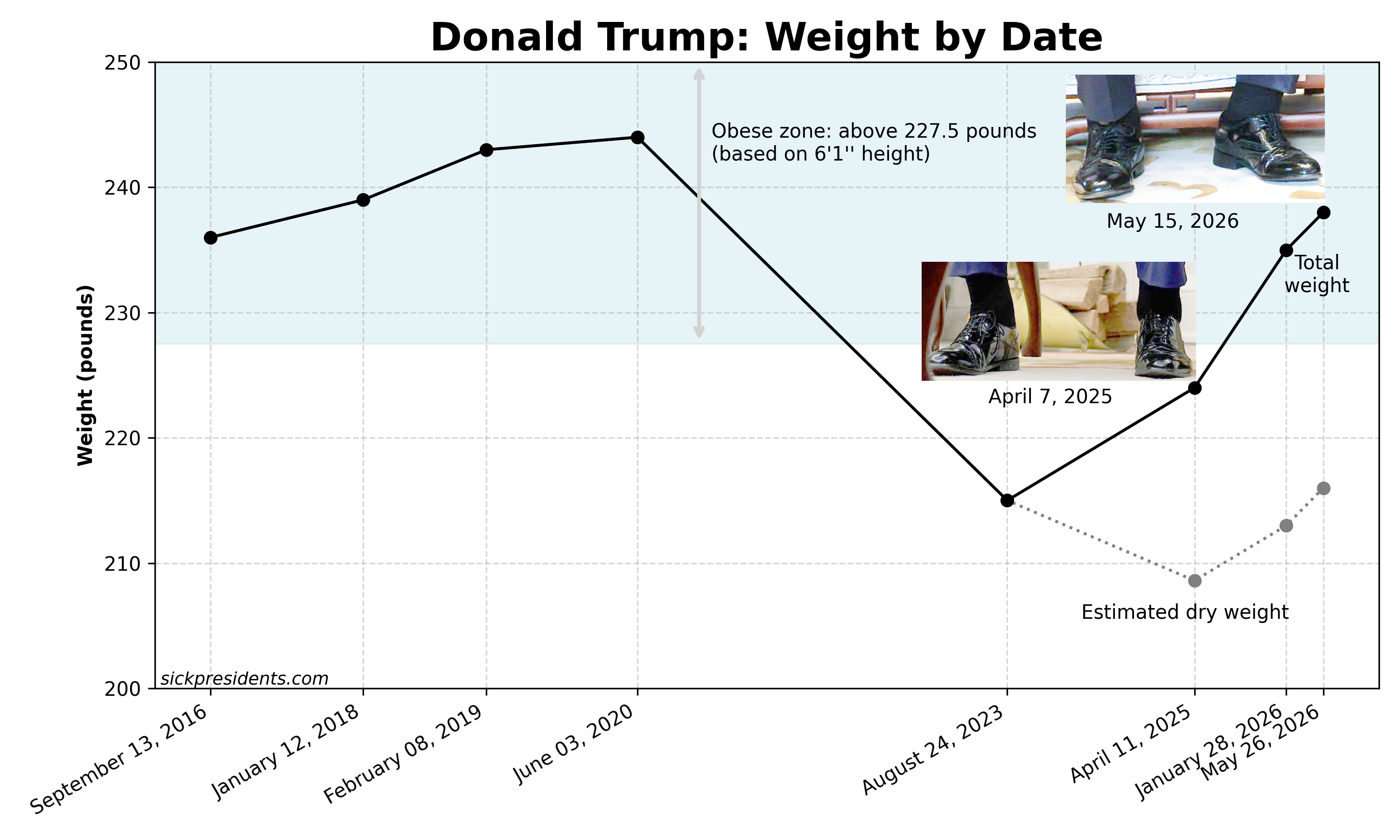
Fluid accumulation and weight
Until mid-2024 Trump's weight was largely determined by the balance between the number of calories he ate and the number of calories he burned. No longer. Serial photographs (not shown) demonstrate that, around July 2024, his face began to appear puffy. About the same time, his ankles enlarged. Both of these changes are driven by the abnormal accumulation of fluid in his tissues.The upshot, as far as weight is concerned, is that Trump's weight, as measured when he steps on the scale, is no longer under the sole influence of the calories he eats and the calories he burns. His total weight is the sum of his "dry" weight (muscle, bone, fat) and his excess "fluid" weight (in his legs, mostly, but a bit in his face and who knows what in between). As the chart above shows, Trump's dry weight appears to have been more or less stable from early 2024 to mid-2026. The dry weight is calculated by subtracting an estimate of the fluid weight from the total weight on the scale. This process is not very accurate, because it is not practical to measure the weight of the fluid directly. But it is the best we have. White House reporters from both the New York Times and the Washington Post failed to understand that simplistic criteria for obesity do not apply when someone is carrying 20 pound of fluid weight 4 8. But they are not medical reporters. From now on, future short term variations (day-to-day and week-to-week) in Trump's weight are going to depend chiefly on changes in the amount of fluid accumulated. That can change rapidly — in minutes if a physician gives diuretic medications. Absent medications, it is the salt content of food that is the main driver of short-term fluid changes, because fluid follows the salt. This does not mean weight is now unimportant to Trump. In fact, it means just the opposite. His weight becomes a direct indicator of his cardiovascular status. It also becomes an indicator of his general health status: past a certain level of severity, amyloidosis and/or heart failure cause weight loss. (In the zoomed-in ankle images on this page, only the color balance has been adjusted —
there has been no alteration that would change the size or location of structures.)
Photo credits below.
Early ankle swelling — 2024
Trump had swollen ankles while campaigning for president in 2024 and he had swollen ankles the day he walked into the White House to begin his second term. Given the February 2024 photo above and the July 2024 photos below, onset appears to have been during this interval.The thin ankles of Dec. 6 are notable, especially compared to the next day's thicker appearance. Both photos were taken during journalist interviews. The difference could be explained by wearing compression stockings before the Dec. 6 interview or by diuretic medication. (The loose shoelaces on Dec. 6 also suggest a recent shrinkage in foot size.) It is interesting to note that in his first term, Trump waited over a year to have his first medical examination. By contrast, less than six weeks into his second term, his physician had already announced that a physical exam was on the calendar 9. Did concern about his ankle swelling drive the promptness? 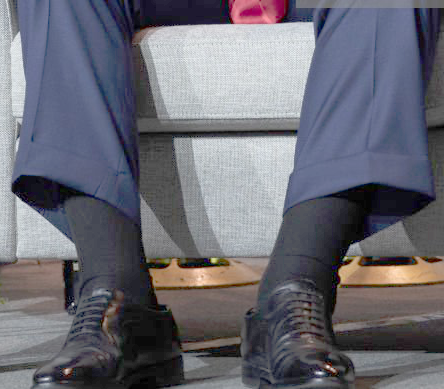
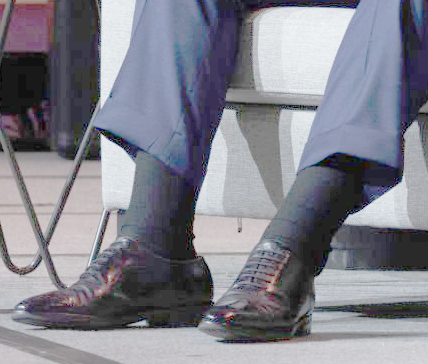
July 31, 2024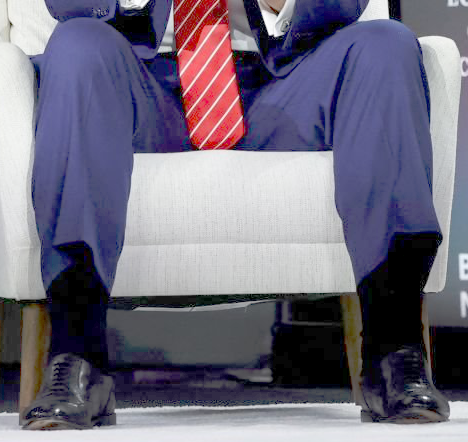
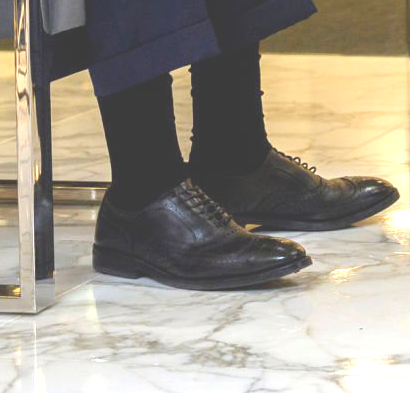
Left: Oct. 15, 2024 —— Right: Dec. 6, 2024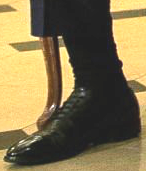
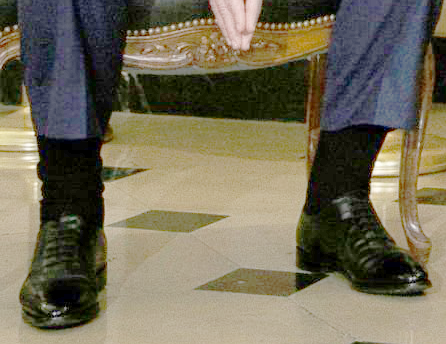
Dec. 7, 2024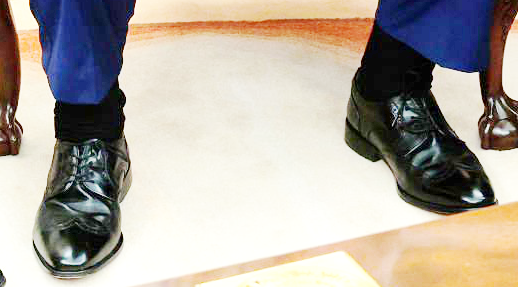
Feb. 24, 2025
Public disclosures about ankle swelling (edema)
Although photographs show Trump retaining fluid in his legs and face starting in mid-2024, it was not until mid-2025 that the president's physician had anything to say about fluid retention and, it can be argued, that was only because press photographs had shown marked swelling of Trump's ankles. The president's physician assessed the ankle swelling as follows (his quotes in italics).[April 13, 2025 MORE] . . . . . (no mention) . . . . . . .Outside of his official public reports, the presidential physician presented a statement to the Wall Street Journal, published January 1, 2026, saying that Trump has "superficial chronic venous insufficiency" 10. The word "superficial" is important. It means that multiple treatments are available for his [supposed] condition. Why have they not been applied? There is a peculiar aura of resignation about his [supposed] problem.
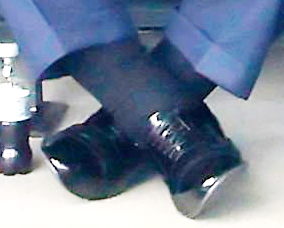
In other words, the president's "comprehensive exam, which included diagnostic and laboratory testing, as well as consultations with fourteen specialty consultants" failed to note any swelling. Oops. That is embarrassing. Here is the reality: photos from the same month show markedly swollen ankles. They were substantially smaller two months earlier, in Feb. 2025 (photo above).[Three months pass] [July 17, 2025 MORE] In recent weeks, President Trump noted mild swelling in his lower legs. ... Out of an abundance of caution, this concern was thoroughly evaluated by the White House Medical Unit. The President underwent a comprehensive examination, including diagnostic vascular studies. Bilateral lower extremity venous Doppler ultrasounds were performed and revealed chronic venous insufficiency, a benign and common condition, particularly in individuals over the age of 70. Importantly, there was no evidence of deep vein thrombosis (DVT) or arterial disease. ... An echocardiogram was also performed and confirmed normal cardiac structure and function. No signs of heart failure, renal impairment, or systemic illness were identified. 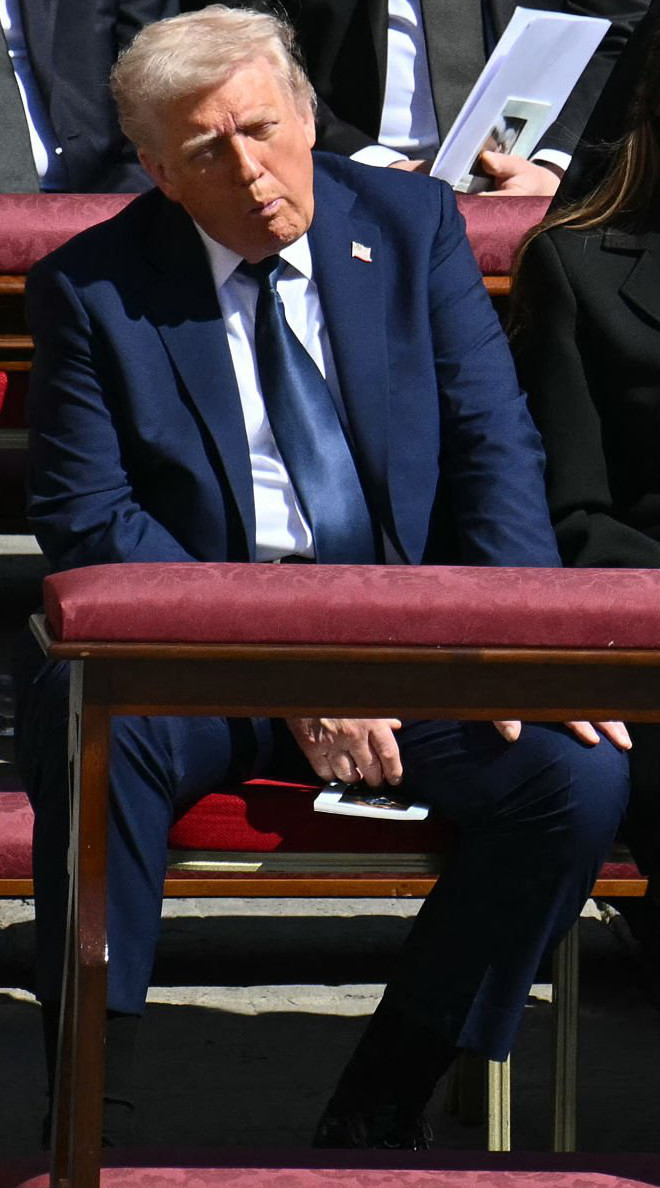
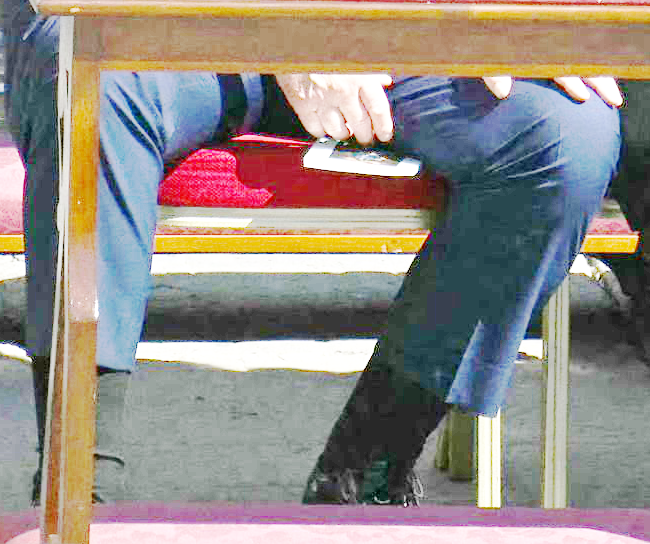
April 26, 2025Here is the reality: these are markedly swollen ankles, the same week.[Ten months pass] [May 29, 2026 MORE] Slight lower leg swelling was noted, with improvement from last year. 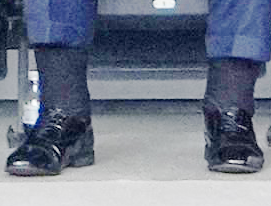
July 13, 2025Here is the reality: these are markedly swollen ankles.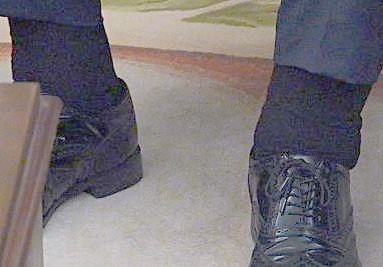
April 28, 2026
Disclosure irregularities
At the risk of belaboring the obvious, multiple irregularities attend the handling of Trump's swollen ankles in official medical reports:
- Failed at all times to mention the accumulation of fluid in the face.
- The contrast between the 2024 and 2025 facial pictures is stark. The later one has obvious puffiness around the eyes ("peri-orbital edema") and a balloonish sense to the cheeks. The 2026 image retains the puffy look, but seems less "inflated," as if there has been a loss of dry weight that has deflated the face.
- Failed to mention ankle swelling in April 2025 report, when it clearly existed, having been photographically apparent even in February 2025.
- The only way that swelling would be inapparent for the annual physical two months later is if the physician had applied some treatment to get rid of the fluid. If he did that, he had an obligation to mention that in his report.
- Ankles can hold substantial fluid before it becomes visually apparent 6b — feeling the ankles is a much better way to test.
- Low-balled the amount of ankle swelling in the July 2025 report.
- Low-balled the amount of ankle swelling in the May 2026 report.
- Dubious claim in May 2026 that the ankle swelling had improved.
- Was inexcusably late in evaluating the swelling.
- Only when press photos taken on July 13, 2025 caused a furor did Trump's medical team go to work and get blood work, lower limb Dopplers, and an echocardiogram.
- OR - - Performed the evaluation early in the year but withheld the results until the furor erupted.
- Date ambiguities are a feature of medical reports in Trump's second term MORE.
Contradictions in CVI diagnosis
The July 2025 report from the presidential physician diagnosed the cause of Trump's swollen ankles as "chronic venous insufficiency, a benign and common condition" MORE. However, so many contradictions attend this diagnosis that one may reasonably ask whether it makes sense as the sole cause of Trump's markedly swollen ankles.
- Chronic venous insufficiency (CVI) affects the leg veins only 11, hence it cannot cause swelling in the face, as Trump has.
- In January 2026, for example, an interviewer thinks "his eyes are puffy" 7,
- Trump's problem is chronic, but has acute features. His ankle swelling rapidly worsened betweeen February and April 2025 — just two months.
- Excess weight is a major contributor to chronic venous insufficiency, but Trump had the exact opposite experience: his ankle swelling appeared after a major drop in weight.
- Calf exercises are central to treatment of chronic venous insufficiency, but no physician report has this recommendation for him.
- In fact, no statements about recommended treatment have appeared.
- Trump has stated that he tried compression stockings briefly, but disliked them and stopped 10.
- Why have Trump's ankles been allowed to remain so swollen?
- The marked swelling itself carries serious risks to the skin and merits aggressive treatment before complications develop. Why have none been applied?
- Weight loss is a mainstay of treatment for CVI. Why not start a GLP-1 drug? Trump already thinks he should "probably" be taking one 4 5.
- Medications for CVI are available 11.
- Interventional treatments, including sclerotherapy and surgery, are available for CVI; 90% of patients treated with radiofrequency ablation are free from saphenous vein reflux 11. If Trump's disease is too advanced for such treatment now, how could it have been allowed to get this severe?
- The physician appeared surprised by the swelling.
- During the evolution of the chronic disease, symptoms are frequent, including complaints of varicose veins, leg heaviness or aching, and skin changes in the legs 11.
- Did Trump mention none of these to physicians before July 2025? Not even the complications that affect his appearance?
- Did no physician note varicose veins in Trump's legs during the putatively "chronic" evolution of his disease?
Conclusions
It is difficult to accept the diagnosis of chronic venous insufficiency in President Trump. There are too many contradictions in the diagnosis and too many irregularities in his medical reports MORE. One of the strongest points against the CVI diagnosis is the abysmal medical care he has gotten for CVI... if indeed he has CVI. Treatment should have started long ago, and he should be getting treatments now that obviously diminish the swelling. Because I do not believe that Trump has bad doctors, I must also believe that he does not have CVI. Well, let me refine that. I don't believe CVI is the sole cause of Trump's ankle swelling. (His facial swelling is also strong evidence for this view.) Trump may have *some* degree of CVI, but he must also have another condition that is causing the larger share of his fluid retention. What could that "another condition" be? First, it must be poorly treatable, because Trump's ankles are not getting better. Second, the list of possibilities is considerably narrowed by the July 2025 report stating that no signs could be found for several causes of swelling — "heart failure, renal impairment, [and] systemic illness" MORE. These seem like a difficult pair of constraints, but there are ways to arrive at an answer..... MORE.
Photo credits
Note: Photos of Trump's ankles are few and far between, explaining why the dates of the ankle photos do not tightly match the regular spacing of the face photos.
- Ankles in graph
- April 2025: Yuri Gripas / Abaca / Bloomberg via Getty Images — https://www.gettyimages.com/detail/news-photo/president-donald-trump-during-a-bilateral-meeting-with-news-photo/2208500228
- May 2026: Evan Vucci-Pool / Getty Images — https://www.gettyimages.com/detail/news-photo/president-donald-trump-and-chinese-president-xi-jinping-news-photo/2275740428
- Face mosaic
- 1/28/2023: Logan Cyrus / AFP via Getty Images — https://www.gettyimages.com/detail/news-photo/former-us-president-donald-trump-looks-on-as-south-carolina-news-photo/1246627744
- 1/23/2024: Timothy A. Clary / AFP via Getty Images — https://www.gettyimages.ca/detail/news-photo/republican-presidential-hopeful-and-former-us-president-news-photo/1948407729
- 1/23/2025: Anna Moneymaker/Getty Images — https://www.gettyimages.com/detail/news-photo/president-donald-trump-speaks-to-reporters-after-signing-a-news-photo/2195559727
- 1/30/2026: Alex Wong/Getty Images — https://www.gettyimages.com/detail/news-photo/president-donald-trump-joined-by-secretary-of-news-photo/2259091462
- Ankles mosaic
- 11/8/2022: Joe Raedle/Getty Images — https://www.gettyimages.com/detail/news-photo/former-u-s-president-donald-trump-gestures-during-an-news-photo/1440141606
- 2/20/2024: Justin Sullivan/Getty Images — https://www.gettyimages.com/detail/news-photo/republican-presidential-candidate-former-u-s-president-news-photo/2025992451
- 2/24/2025: Chip Somodevilla/Getty Images — https://www.gettyimages.com/detail/news-photo/president-donald-trump-calls-on-reporters-while-hosting-news-photo/2201771031
- 4/28/2026: Aaron Chown - Pool/Getty Images — https://www.gettyimages.com/detail/news-photo/president-donald-trump-meets-with-britains-king-charles-iii-news-photo/2273023987
- Ankles on April 26, 2025
- Mandel Ngan / AFP via Getty Images — https://www.gettyimages.com/detail/news-photo/president-donald-trump-us-first-lady-melania-trump-estonias-news-photo/2211407258
- Ankles on July 13, 2025
- Left: Lokman Vural Elibol / Anadolu via Getty Images — https://www.gettyimages.com/detail/news-photo/president-of-united-states-donald-trump-and-first-lady-of-news-photo/2224390855
- Right: Michael Reaves / Getty Images — https://www.gettyimages.ca/detail/news-photo/president-donald-trump-and-first-lady-melania-trump-join-news-photo/2224961729
- Ankles on April 28, 2026
- 4/28/2026: Aaron Chown - Pool/Getty Images — https://www.gettyimages.com/detail/news-photo/president-donald-trump-meets-with-britains-king-charles-iii-news-photo/2273023987
Cited Sources
- Reiner, Jonathan. I Was Dick Cheney's Cardiologist. Trump Has Not Looked Well, and We Should Know Why. New York Times. Aug. 12, 2026. Available on the web at: https://www.nytimes.com/2026/08/12/opinion/trump-health-questions.html
- Chavez, Paloma. Bill O'Reilly Urges Trump, 80, to Take a Month Off for His Wellbeing: "You Need a Breather". People. July 23, 2026. Available on the web at: https://people.com/bill-oreilly-urges-trump-take-month-off-12025441
Comment: O'Reilly's comment is startling in its similarity to the Chicago Tribune's editorial of March 22, 1865, which said of a "worn and weakened" Abraham Lincoln: "He needs a least a month's entire rest from his official duties." (See The Physical Lincoln Complete, pp 105, 387-388.) Lincoln was then in the advanced stages of cancer, as discussed in The Physical Lincoln. - Gardner, Amy. Where did the height and weight on Trump's booking record come from?. Washington Post. Aug. 24, 2023. Available on the web at: https://www.washingtonpost.com/national-security/2023/08/24/trump-height-weight/
- Pager, Tyler. Trump Says He "Probably Should" Take Obesity Drugs, but Has Not. New York Times. Jan. 8, 2026. Available on the web at: https://www.nytimes.com/2026/01/08/us/politics/trump-weight-obesity-drugs.html
- Rogers, Katie. The Many Faces of Trump: What We Saw When We Interviewed the President. New York Times. Jan. 8, 2026. Available on the web at: https://www.nytimes.com/2026/01/08/us/politics/trump-oval-office-interview-scene.html
- Braunwald, Eugene. Heart Disease. 5th ed. Philadelphia: WB Saunders, 1997.
a pp.453-454 in chapter: "Clinical aspects of heart failure" by Braunwald E, Colucci WS, Grossman W. b pp.453-454
- Terris, Ben. "The superhuman president:" a good-faith attempt to ascertain the truth about Donald Trump's health. New York Magazine. Jan. 26, 2026. Available on the web at: https://nymag.com/intelligencer/article/donald-trump-addresses-health-hand-bruise-stroke-mri-greenland.html
- Diamond, Dan. Doctors say Trump's weight poses serious risk. Washington Post. Aug. 23, 2026. Available on the web at: https://www.washingtonpost.com/politics/2026/08/23/doctors-say-trump-weight-poses-significant-health-risk/
- Barbabella, Sean P. [White House Statement on the President's Annual Physical Exam]. (Published March 1, 2025. Downloaded on 2026-09-06.) Available on the web: https://www.presidency.ucsb.edu/node/376570
- Linskey A, Dawsey J, McGraw M. As Signs of Aging Emerge, Trump Responds With Defiance. Wall Street Journal. Jan. 1, 2026. Available on the web at: https://www.wsj.com/us-news/as-signs-of-aging-emerge-trump-responds-with-defiance-769c5dcd
- Eberhardt RT, Raffetto JD. Chronic venous insufficiency. Circulation. 2014; 130: 333-346. Available on the web at: https://doi.org/10.1161/CIRCULATIONAHA.113.006898
George Washington · John Adams · Thomas Jefferson · James Madison · James Monroe · John Q. Adams · Andrew Jackson · Martin van Buren · William Harrison · John Tyler · James Polk · Zachary Taylor · Millard Fillmore · Franklin Pierce · James Buchanan · Abraham Lincoln · Andrew Johnson · Ulysses Grant · Rutherford Hayes · James Garfield · Chester Arthur · Grover Cleveland · Benjamin Harrison · Grover Cleveland · William McKinley · Theodore Roosevelt · William Taft · Woodrow Wilson · Warren Harding · Calvin Coolidge · Herbert Hoover · Franklin Roosevelt · Harry Truman · Dwight Eisenhower · John Kennedy · Lyndon Johnson · Richard Nixon · Gerald Ford · Jimmy Carter · Ronald Reagan · George Bush · William Clinton · George W. Bush · Barack Obama · Donald Trump.45 · Joseph Biden · Donald Trump.47