
Health and Medical History of President Dwight Eisenhower
President #34: 1953-1961
Lived 1890-1969
Lived 1890-1969
— Eisenhower to his press people after his heart attack 1a
Health and Medical History of President
Dwight Eisenhower
President #34: 1953-1961
Lived 1890-1969
Lived 1890-1969
↓


 Lived 1890-1969
2026
1776
 Revolutionary War1776-1783
War of 18121812-1815
Mexican-American War1846-1848
Civil War1861-1865
Spanish-American War1898-1899
World War 11917-1918
World War 21941-1945
Korean War1950-1953
Viet Nam War1964-1975
Desert Storm1990-1991
Bush's Wars2001-2021
Iran War2026-Now
Lived 1890-1969
2026
1776
Revolutionary War1776-1783War of 18121812-1815Mexican-American War1846-1848Civil War1861-1865Spanish-American War1898-1899World War 11917-1918World War 21941-1945Korean War1950-1953Viet Nam War1964-1975Desert Storm1990-1991Bush's Wars2001-2021Iran War2026-Now— Eisenhower to his press people after his heart attack 1a
 |
UNDER CONSTRUCTION |
Maladies & Conditions
· appendectomy · high blood pressure · monumental stress · "melanoma" · chimney, then quit · arthritis · Crohn disease · hypertension and pheochromocytoma · infarct · post-infarct mental state · bowel obstruction · deciding to operate · deciding to run again · stroke · high cholesterol · cholecystectomy · hypertension · 4 infarcts, 14 arrests · intestinal obstructions · prostatic hypertrophy · balloon pump · cardiac decompensation
Odds & Ends ·
FAQ ·
Doctors ·
Resources ·
Cited Sources
Maladies and Conditions


The first distinctly abnormal blood pressure recorded in Eisenhower's 14,000 pages
of medical records was 164/94 in 1930.
He would then have been 40. Checks over the next three days gave acceptable results.
4
His blood pressure was problematic during World War II. A systolic blood pressure
of 168 was found in January 1943. That August he was put to bed for three days for
"high BP and fatigue." Blood pressure was more frequently mentioned in 1944 and 1945.
4



Later in the war, the stress on Eisenhower was monumental as he prepared the
D-Day invasion of Europe. Here he is in early 1944:
Eisenhower’s ears were ringing. The problem had been annoying him for weeks, a symptom of his elevated blood pressure, which had spiked alarmingly in recent weeks. His doctors had not told him, fearing that to do so would compound the problem. ... He had lost weight... He slept very little, chain-smoked up to four packs of cigarettes, and drank up to fifteen cups of coffee a day. ... His aides had looked in at night several times to find the general sitting on the edge of his bed, staring silently out the window. He had been fighting a cold since he had arrived in a damp, chilly London in January. His doctors were sneaking doses of blood pressure-lowering drugs into his cold medication. 5a


In August or September 1944, Eisenhower had a superficial blackish nodule removed from his
trunk because it was thought to be a malignant melanoma. Kay Summersby's book mentions an incident
involving an "infected cyst," which was the cover story for the operation. The lesion
proved to be a seborrheic keratosis, but Eisenhower appears never to have been told this.
MORE
6


In March 1949, Eisenhower's friend and personal physician,
Dr. Howard Snyder,
told Ike he would have to cut down his smoking from four packs of cigarettes per day to one
pack:
7a:
After a few days of limiting his smoking, Eisenhower decided that counting his cigarettes was worse than not smoking at all, and he quit. He never had another cigarette in his life. ... Eisenhower was frequently asked how he did it; he replied that it was simple, all he did was put smoking out of his mind. It helped, he would add with a grin, to develop a scornful attitude toward those weaklings who did not have the will power to break their enslavement. He [remarked]: "I nursed to the utmost ... my ability to sneer."Eisenhower put on weight after he quit smoking 1b.

Boller
8a
tells this story:
One day a White House visitor noticed the President was wearing leather bandages on his left wrist. When Ike explained that he had a mild arthritic condition there, the visitor said he was glad it wasn't serious. "I should say it is serious!" exclaimed Ike indignantly. "It means that I can't play golf!"Was this a manifestation of his Crohn disease?
For 33 years after his 1923 appendectomy, Eisenhower had episodic lower abdominal pain. The
diagnosis of partial small bowel obstruction was entertained in a November 1947 episode, which
ultimately resolved spontaneously. In May 1956 a small bowel series led to the diagnosis of
regional enteritis (Crohn disease) affecting the terminal ileum.
2

At autopsy, a 1.5 cm pheochromocytoma was discovered on Eisenhower's left adrenal gland
4.
Comment:
This is an often slow-growing tumor that can secrete hormones like adrenaline,
which raises blood pressure. Hormone release can occur suddenly, so blood pressure
may have a spiking pattern. The tumors can be benign (meaning they do not spread)
or malignant (meaning they can spread). There is no mention whether Eisenhower's
tumor was benign or malignant, but to my eye, the cells pictured in
reference 4 look benign.
There is strong evidence that
Abraham Lincoln
also had a phenocromocytoma, but his would have been malignant.
The question is: How long did Eisenhower have the pheochromocytoma, and when did
it start affecting his blood pressure?
In 1954, two of Eisenhower's physicians noted "wide swings" in his blood pressure.
4
This was before his first heart attack (1955). By 1958, Eisenhower's diastolic
pressure was consistently 90. In 1959, his physician wrote: "his BP was quite irregular,"
which fits a spiking tendency. A consultant,
Dr. Doss Lynn,
proposed starting anti-hypertensive
medication, but Eisenhower's primary physician,
Dr. Howard Snyder,
was unwilling.
1c.
Snyder did, however, occasionally give blood pressure-lowering drugs
to relieve the headaches that Eisenhower was having during blood pressure spikes.
4
Comment:
If Eisenhower was having headaches from his blood pressure, that indicates a
pretty substantial degree of high blood pressure.
By 1960 the systolic pressure was commonly above 140
4.
Eisenhower had a left anterior myocardial infarction in September 1955, while on vacation at
his in-laws' house in Denver. He was transported by car to Fitzsimmons Veterans Hospital and
placed in an oxygen tent. His EKG showed ventricular and supraventricular premature beats.
Although he developed a friction rub, he was treated with heparin
9.
Eisenhower broke with precedent and released detailed information about his illness to the
public, but nevertheless, some of what the public learned was carefully choreographed
MORE
9.
Eisenhower's long term treatment included coumadin 35 mg/wk, a low fat diet, and maintenance
of weight at 175 pounds
MORE
9a.
His electrocardiogram did not return to normal after the heart attack
10.
Eisenhower ascribed the initial symptoms of his heart attack to onions he had eaten.
This is not surprising: he loved onions and garlic, and ordered the White House cook to serve
them in a small side dish
11a.
In dealing with the public relations aspect of his heart attack, Eisenhower gave
his people the clearest and most admirable possible directive: "Tell the truth,
the whole truth, don't try to conceal anything"
1a.
→ → →
Anyone interested in Eisenhower's heart attack should read the brilliant and masterful book
by Clarence Lasby, which gives a detailed and thoughtful account
1.
From the time of his infarction in September 1955 to the time of his announcement to seek re-election,
"Eisenhower apparently went through the period of anxiety, denial, and depression common
to most cardiac patients"
9.
For example, he was observed to be depressed in Gettysburg toward the end of 1955, but not
to have signs of it such as psychomotor retardation, early morning awakening, constipation,
and decreased appetitite
9b.
Eisenhower developed vague, ill-defined discomfort in the lower abdomen at 12:30 am on June
8, 1956. His physician arrived at the White House 30 minutes later and found moderate distention
and tympany, but no particular point of abdominal tenderness. The President slept fitfully
for the next few hours. Tap water enemas in the morning gave no relief. The pain became colicky
and centered on the umbilicus and right lower quadrant. At 10:30 am he vomited 1500cc of bile-stained
fluid. His pulse was 92, and his blood pressure had fallen from 140/100, when first seen, to
100/76. When seen by a consultant, Eisenhower was listless, apathetic, perspiring freely, had
somewhat cool and clammy skin and a pulse of 120. After 600cc of D5W [sic] given intravenously,
the hemodynamics improved and the President was tranferred to Walter Reed General Hospital
(after the ambulance found the proper White House entrance on the second try
11b).
Eisenhower's chronic anticoagulation therapy was suspended.
By 1:00 am on June 9, the 4
consulting surgeons unanimously felt surgical intervention was indicated. (However, the consultants
had to be browbeaten into this consensus! See below.) Distention of the small bowel, seen on
the initial x-ray, was increasing. At 2:20 am the President was induced and intubated and the
operation began. Electrocardiographic observations were made during the 2 hour procedure.
At operation, the terminal 30 to 40 cm of the ileum had the typical appearance of chronic "dry"
regional enteritis. The bowel immediately proximal to this was greatly dilated, moderately
edematous, but pink. An ileotransverse colostomy was performed, bypassing the obstruction.
The procedure was uneventful; 500 cc of blood were given.
The post-operative course was
smooth as well, save for a fever and minor wound infection on the 11th post-operative day.
He began conducting official business on the fifth post-operative day.
2

Without surgery, Eisenhower's 1956 bowel obstruction could easily have killed him (see above).
Even so, the decision to operate was contentious. Eisenhower had had a serious heart attack
just nine months earlier, and this made surgery risky. As you might expect, it is difficult
to decide to operate on the President of the United States when he might not survive the operation.
In Eisenhower's case, it took some dramatics from his personal physician to convince the consulting
surgeons that they needed to operate.
MORE
12
This episode illustrates one of the cardinal perils in delivering medical care to the
President.
In 1956 Eisenhower had to decide whether to run for a second term. Health concerns were a major
part of this decision. Both his heart attack and the operation for a bowel obstruction had
occurred within the previous 12 months (see above). Although his physicians ultimately assured
him that he was physically fit to run for re-election, Eisenhower apparently did not have complete
confidence in their opinion. In a private conversation he expressed hope that the physicians
"knew what they were talking about since the job of being president could not be performed
by anyone who was not in good condition."
12

While speaking to his secretary on November 25, 1957, Eisenhower found he could not complete
his sentences. When examined he had neither motor nor sensory impairment. The diagnosis was
occlusion of the left middle cerebral artery. Eisenhower, who was 67 years old and had three
years remaining in his second term of office, was already taking coumadin at this time
9a.
After remaining in seclusion for 3 days, Eisenhower returned to work, his speech not yet back to normal. To some, the press coverage of his difficulties in this period seemed "unnecessarily savage and sadistic," since some reporters seemed to be counting the number of goofs Eisenhower made during a press conference. But unlike the 1955 heart attack and the 1956 abdominal operation, the 1957 stroke occurred at a time when important presidential meetings were scheduled MORE 9a.
After remaining in seclusion for 3 days, Eisenhower returned to work, his speech not yet back to normal. To some, the press coverage of his difficulties in this period seemed "unnecessarily savage and sadistic," since some reporters seemed to be counting the number of goofs Eisenhower made during a press conference. But unlike the 1955 heart attack and the 1956 abdominal operation, the 1957 stroke occurred at a time when important presidential meetings were scheduled MORE 9a.
It was Eisenhower's last full day as president. That morning, his
longtime friend and physician,
Dr. Howard Snyder,
gave Eisenhower the results of his (Ike's) latest blood cholesterol — but
knocked down the cholesterol level by 50 points. Snyder did not want to shock
Eisenhower with the real numbers.
1d
The first symptoms of cholecystitis occurred in August 1966 with a history of indigestion,
belching, postprandial and mild substernal discomfort. Gallbladder x-rays showed cholelithiasis
with multiple stones. It was difficult to distinguish the substernal discomfort of gallbladder
disease and cardiac disease. Cholecystectomy under general anesthesia on December 12, 1966
was uneventful, and resulted in the removal of 16 stones. Eisenhower was discharged on the
15th hospital day
3.
Eisenhower's blood pressure in 1965-1966 (at least) included large spikes and swings.
His systolic was predominantly between 130 and 140, but spikes included one to
200/120 and others to the 190s/100s. Messerli et al note that the spike in diastolic
pressure argues against mere vascular stiffness as the cause of the labile blood
pressure, and offerssecretions from the pheochromocytoma as an explanation.
4.
From April through August 1968, Eisenhower had 4 heart attacks and 14 cardiac arrests.
One of the most remarkable and fortunate things about all this is that although he was unconscious a number of times his intellectual functions, memory, and recall and interest in current events were not compromised. His energy reserve was low, however, so his activity was restricted to three periods of 45 minutes out of bed each day. His morale and spirits were magnificent considering all he had been through. 3 MORE(Between his first infarction in 1955 and the April 1968 infarct, he had suffered two additional infarcts. Thus, the August 1968 event was his seventh myocardial infarction.)
Episodes in May 1967, August 1967, June 1968, December 1968, February 1969. The last of these
resulted in an operation on February 23, 1969. (Given Eisenhower's cardiac history in 1968,
described above, this must have been a difficult decision). Postoperative convalescence was
largely unremarkable, except for the close attention which had to be paid to his fluid status
because of his heart disease.
3
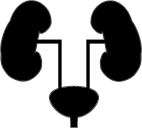
During the recovery from the February 1969 laparotomy, a suprapubic catheter had to be inserted
because of prostatic hypertrophy.
3
This story may be apocryphal, but here goes. In the late 1960s, the intra-aortic balloon pump
(IABP) was being readied for its first use in a human. Its developers thought that private
insurance companies would not stand for such a radical new therapy, and approached the military,
asking them to keep an eye out for IABP candidates in military hospitals.
One day, the call came. A retired general was hospitalized in Walter Reed Army Medical Center. He had a history of multiple infarcts and was now end-stage. He sounded like a perfect candidate. The excited IABP scientists were all ready to go, until they found out the general was Eisenhower. They declined the opportunity because they worried that if the IABP failed in him, it would permanently ruin the future prospects of the device.
One day, the call came. A retired general was hospitalized in Walter Reed Army Medical Center. He had a history of multiple infarcts and was now end-stage. He sounded like a perfect candidate. The excited IABP scientists were all ready to go, until they found out the general was Eisenhower. They declined the opportunity because they worried that if the IABP failed in him, it would permanently ruin the future prospects of the device.

Eisenhower's cause of death was coronary artery disease leading to heart attacks
and weakening of the heart muscle ("ischemic cardiomyopathy"), complicated by arrhythmias.
His smoking, high blood pressure, and high cholesterol all spurred his disease.
His pheochromocytoma likely contributed, too, as the
"catecholamine" chemicals it secretes have a direct toxic effect on heart cells.
"Deterioration of [Eisenhower's] cardiac status became evident about 15 March, progressed
markedly on 26 March and led to his death at 12:25 pm 28 March 1969"
3.
Odds and Ends
- In addition to his laudable openness about his heart attack, Eisenhower after death was laudably open to scholars about his entire medical history. His medical records in the Eisenhower Library span more than 14,000 pages and occupy more than 10 feet of shelf space 4.
- Eisenhower wanted small pillows to fit under his neck while he slept 11c. Whether this was mere habit, or indicative of neck problems is unknown.
- Eisenhower was bald. The first time he met his future Secretary of the Treasury, George Humphrey, Ike said to the balding Humphrey as he walked into the room: "George, I see you comb your hair the way I do." 8b
- Eisenhower was born David Dwight Eisenhower, but later reversed his first two names. 13a
- The extroverted Mrs. Eisenhower had a heart condition dating from childhood. She seemed fragile during her husband's presidency, spending much time in bed. "Social gatherings usually turned into a torment with headaches, asthma, weakness. and the [sic] inner ear trouble, which made her feel dizzy." Her inner ear difficulty led to abnormalities in her gait that sparked rumors she drank excessively. "The day of a party, she had to go to bed and stay there till the last minute." The staff referred to her as "Sleeping Beauty" because of her extensive time in bed. 11d
Frequently Asked Questions (FAQ)
What was Eisenhower's cause of death?
Eisenhower died from complications of coronary artery atherosclerosis, specifically cardiac arrhythmias and heart failure that arose from myocardial infarction and ischemic cardiomyopathy, which in turn arose from smoking, hypertension, and hypercholesterolemia.
Did Eisenhower smoke?
Yes, Eisenhower was a heavy smoker, consuming up to four packs of cigarettes a day until he quit cold turkey in March 1949 upon the advice of his physician.
Doctors
Before Presidency
During Presidency
After Presidency
Resources
Disclaimer: If you buy through these affiliate links, I may earn a small commission at no extra cost to you.


Cited Sources
- Lasby, Clarence G. Eisenhower's Heart Attack: How Ike Beat Heart Disease and Held onto the Presidency. Lawrence, KS: University Press of Kansas, 1997. ISBN: 9780700608225. [Buy]
a p.80 b p.54 c p.279 d p.291
Comment: This is the greatest single work in all of presidential medicine. It is simply brilliant, and I encourage everyone with interest in presidential medicine to read it, because it establishes a standard that we all should aspire to. - Heaton, LD; Ravdin, IS; Blades, B; Whelan, TJ. President Eisenhower's operation for regional enteritis: a footnote to history. Annals of Surgery. 1964;159:661-666. DOI: 10.1097/00000658-196405000-00003
a p.664
- Hughes, CW; Baugh, JH; Mologne, LA; Heaton, LD. A review of the late General Eisenhower's operations: epilog to a footnote to history. Annals of Surgery. 1971;173:793-799. Pubmed: 4933301.
Comment: Hughes mentions plans to incorporate the General's medical history into book form for the National Archives. - Messerli FH, Loughlin KR, Messerli AW, Welch WR. The President and the Pheochromocytoma. American Journal of Cardiology. 2007; 99: 1325-1329. DOI: 10.1016/j.amjcard.2006.12.043
- Bowden, Mark. Our Finest Day: D-Day: June 6, 1944. San Francisco: Chronicle Books, 2002. ISBN: 9780811830508. [Buy]
a p.2. Bowden provides detailed sources for this paragraph
- Pillsbury, DM. General Eisenhower's "melanoma". Journal of the American Academy of Dermatology. 1981;4:631-632. Pubmed: 7016937.
Comment: Also in: Nero, F. Conversations with the President. Buffalo, NY: Westwood Pharmaceuticals, 1978, volume 1, pp. 13-14. - Ambrose, Stephen E. Eisenhower: Volume One: Soldier, General of the Army, President-Elect: 1890-1952. New York: Simon and Schuster, 1983. ISBN: 9780671440695. [Buy]
a p.488
- Boller, Paul F. Jr. Presidential Anecdotes. New York: Oxford University Press, 1981. ISBN: 9780195029154. [Buy]
 a p.298 b p.291

- Kucharski, A. Medical management of political patients: the case of Dwight D. Eisenhower. Perspectives in Biology and Medicine. 1978;22:115-126. Pubmed: 104273.
a p.123 b p.118
- Anonymous "DG". Past & President: J. Willis Hurst and LBJ. Emory Medicine Magazine. Pages 28-33, Autumn 1996. Available on the web at: https://web.archive.org/web/20160531030846/https://whsc.emory.edu/_pubs/em/1996fall/past_and_president.html
- Parks, Lillian Rogers. My Thirty Years Backstairs at the White House. New York: Fleet Publishing, 1961.
a p.325 b pp.331-332 c p.94 d pp.24-25, 321
Comment: This book stayed on the New York Times best-seller list for 26 weeks, prompting Jacqueline Kennedy to require all staff at the White House to sign a pledge agreeing not to write about their experiences (NY Times, page B8, Nov. 12, 1997). Parks's mother, a maid at the White House from 1909-1939, had actually been encouraged by Eleanor Roosevelt to write and publish a memoir (p260). - Ginzberg, E. Ten encounters with the US health sector, 1930-1999. JAMA. 1999;282:1665-1668. Pubmed: 10553794.
- Montgomery-Massingberd, Hugh (ed). Burke's Presidential Families of the United States of America. 2nd ed. London: Burke's Peerage Limited, 1981. ISBN: 9780850110333. [Buy]
 a p.515
Comment: Maps -- in great detail -- the ancestors and descendants of American presidents through Ronald Reagan. They would have had an exhausting time with President Obama's family tree! MORE
Other Sources
George Washington · John Adams · Thomas Jefferson · James Madison · James Monroe · John Q. Adams · Andrew Jackson · Martin van Buren · William Harrison · John Tyler · James Polk · Zachary Taylor · Millard Fillmore · Franklin Pierce · James Buchanan · Abraham Lincoln · Andrew Johnson · Ulysses Grant · Rutherford Hayes · James Garfield · Chester Arthur · Grover Cleveland · Benjamin Harrison · Grover Cleveland · William McKinley · Theodore Roosevelt · William Taft · Woodrow Wilson · Warren Harding · Calvin Coolidge · Herbert Hoover · Franklin Roosevelt · Harry Truman · Dwight Eisenhower · John Kennedy · Lyndon Johnson · Richard Nixon · Gerald Ford · Jimmy Carter · Ronald Reagan · George Bush · William Clinton · George W. Bush · Barack Obama · Donald Trump.45 · Joseph Biden · Donald Trump.47